loading...


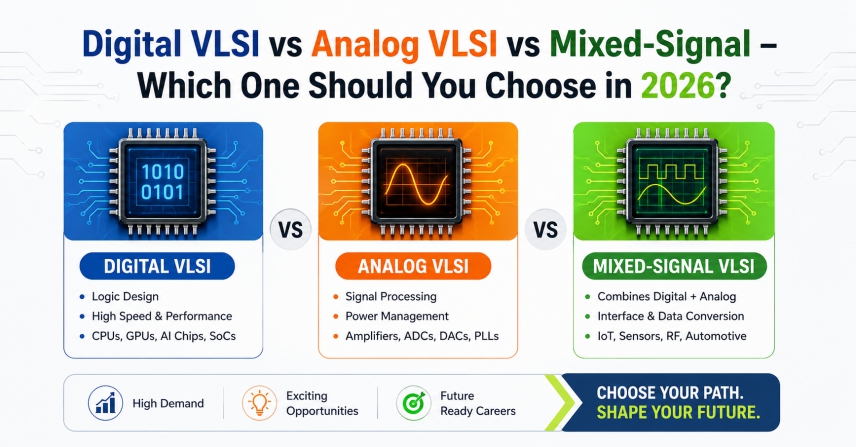
Hey Futurewiz student,
If you’re in 2nd or 3rd year ECE and scrolling through LinkedIn or company career pages, you’ve probably seen this question a hundred times:
“Should I go for Digital VLSI, Analog VLSI, or Mixed-Signal?”
It’s one of the biggest dilemmas every VLSI aspirant faces in 2026. The good news? I’m going to break it down simply, no jargon, no fluff, so you can decide what’s best for your career and skills.
Let’s compare the three domains head-to-head.
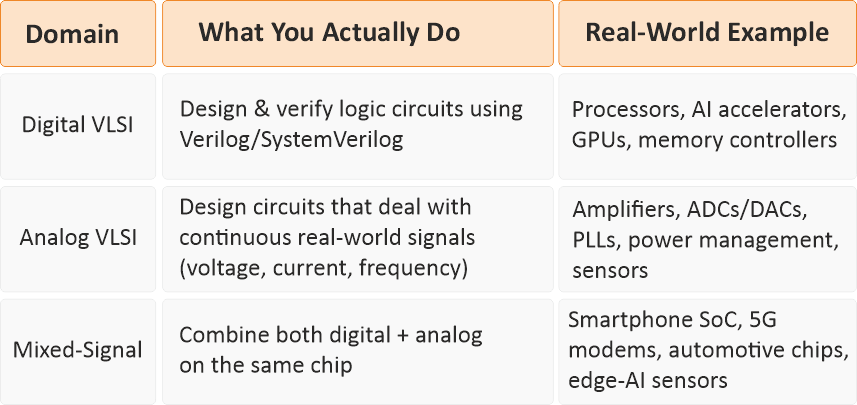
Rule of thumb:
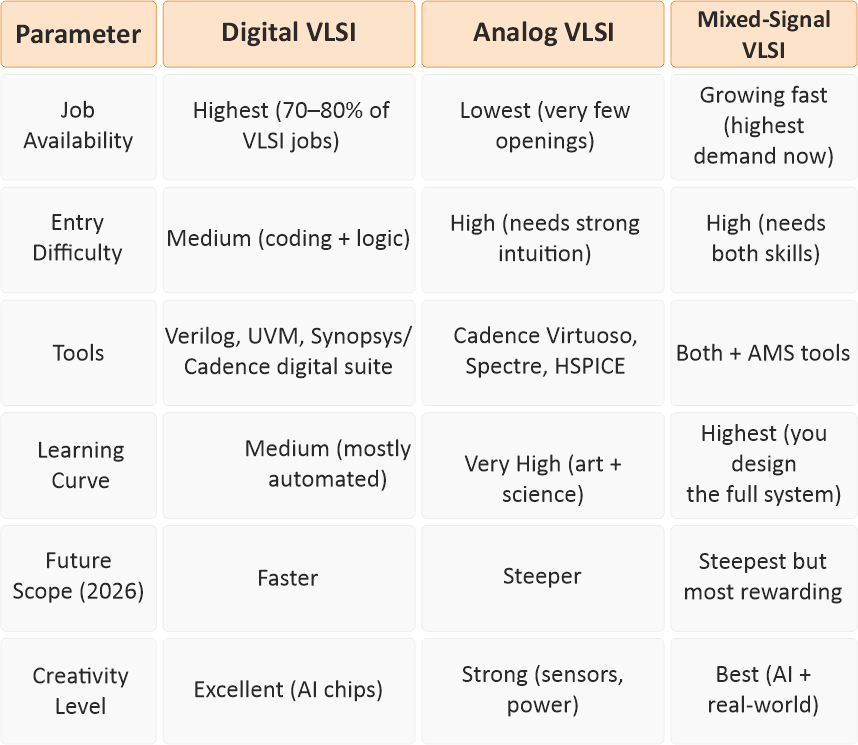
Bottom line: In 2026, Mixed-Signal is the sweet spot for long-term career growth and salary.
Ask yourself these 3 questions:
My personal recommendation for most students in 2026: Start with Digital VLSI (easiest entry and huge demand). Then learn Analog/Mixed-Signal as a specialization. Engineers who know both are the most valuable in the industry right now.
Ready to Make the Right Choice?
At Futurewiz, we offer clear roadmaps for all three paths:
Comment below or reply to this blog with "Digital," "Analog," or “Mixed-Signal”, and we’ll send you a free career roadmap tailored to your choice + 2026 job trends.
The semiconductor industry in India is exploding. The only question is, which path will you take?
Next blog in the series: RTL Design Best Practices That 90% of Freshers Ignore
Keep learning. The chips of 2030 are waiting to be designed by you.
Team Futurewiz: Building India’s next generation of VLSI leaders www.futurewiz.in
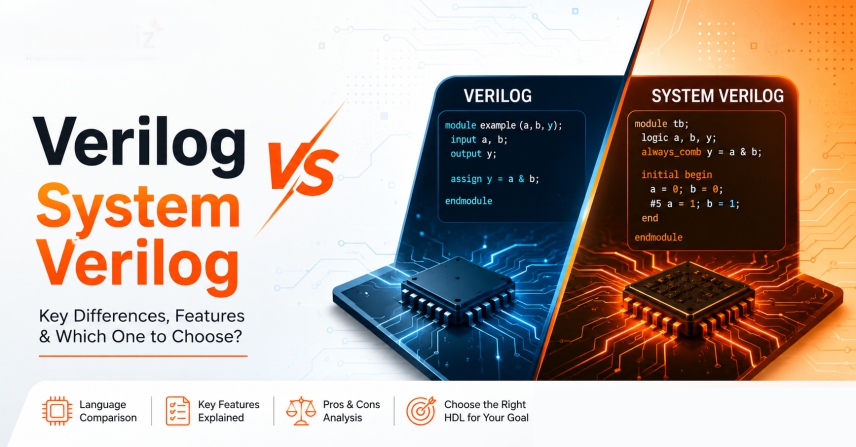 Verilog vs SystemVerilog - A Complete Guide for VLSI Learners
 How to Build a Killer VLSI Portfolio in College (5 Projects Every Student Should Do)
 RTL Design Best Practices That 90% of Freshers Ignore (But Companies Love)
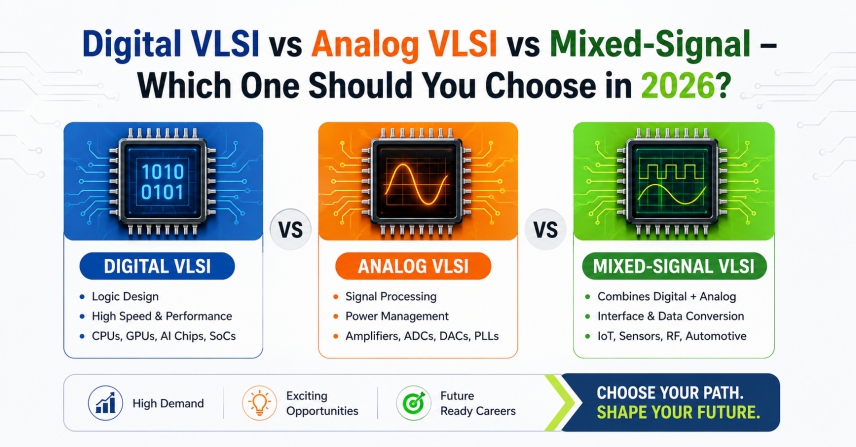 Digital VLSI vs Analog VLSI vs Mixed-Signal – Which One Should You Choose in 2026?
 Designing VLSI Circuits for Quantum Machine Learning Algorithms
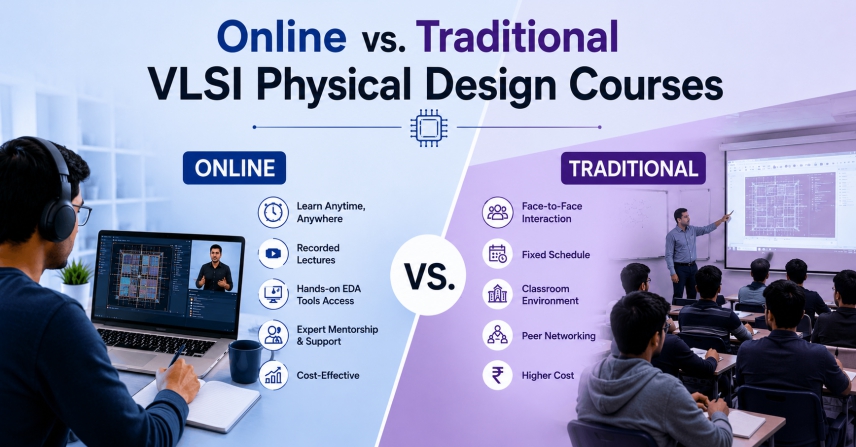 Online vs. Traditional VLSI Physical Design Courses: Pros and Cons
 Advances in VLSI Design for Artificial Intelligence Applications
 Choosing the Right VLSI Training Institute: Factors to Consider
 VLSI Design for Energy-Efficient Wireless Sensor Networks
 How to Become a VLSI Chip Designer: A Beginner's Roadmap for 2026
 A to Z on India, Japan & the Future of Semiconductor Industry: A New Chapter in Tech Collaboration
 RTL Design vs Physical Design: What's the Real Difference?
 The Future of the Semiconductor Industry: What Indian Students Should Know
 Top 7 Career Paths After Completing a VLSI Course
 Best Time Management Tips for Students Preparing for VLSI Careers
 Mastering VLSI Physical Design: A Comprehensive Course Overview
 The Complete FPGA and ASIC Guide
 Verilog Essentials: Mastering the Fundamentals of Hardware Description Language
 Unleashing the Power of System Verilog: A Comprehensive Guide for Aspiring Designers
 Demystifying VLSI chip Design: Exploring the Core Concepts of VLSI Courses
 Basics of VLSI - An Ultimate Guide
 Career Prospects After Completing A VLSI Course
 Top 5 Reasons To Take Up A Professional VLSI Course
 Mastering VLSI Design: A Comprehensive Guide To Understanding Complex Integrated Circuits
 Future-Proof Your Career With A VLSI Course: How Learning About Integrated Circuits Can Boost Your Job Prospects?
 System Verilog: An Overview
 Introduction to Hardware Description Language (HDL)
 Unlock The Potential Of VLSI Design With An Integrated VLSI Course Online
 Universal Verification Methodology:An Efficient Verification Approach
 How to Write a Verilog Module for Design and Testbench
 What Are the Different Career Paths in the VLSI Industry?